Musanze District | September 23–24
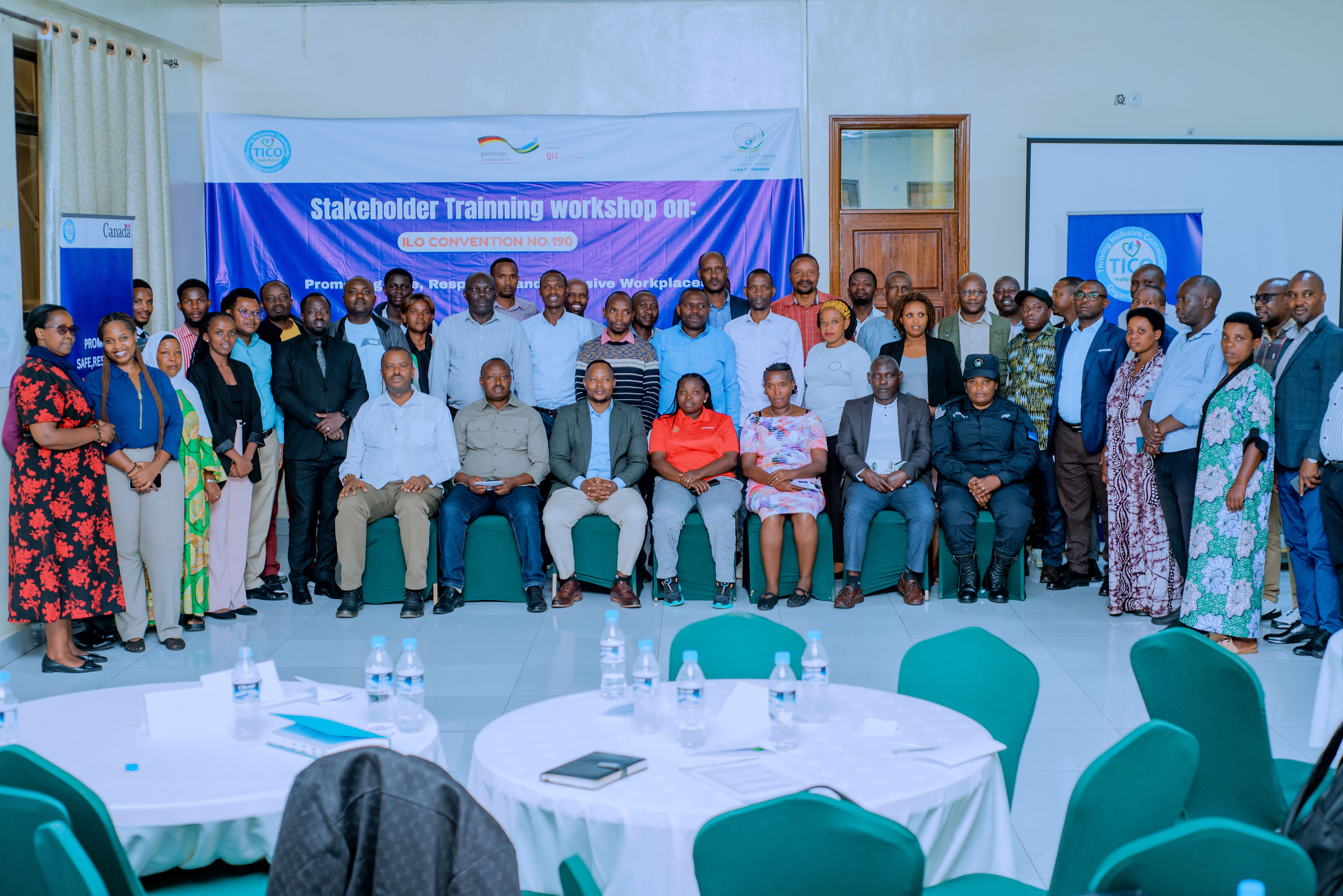
A safe workplace does not happen by accident—it is built through deliberate awareness, institutional commitment, and sustained action. Driven by this conviction, TICO, in collaboration with GIZ Rwanda’s Rights-Based Program (RBP), convened 50 key stakeholders in Musanze District for Phase Two of the training series on promoting safe, respectful, and inclusive workplaces aligned with International Labour Organization (ILO) Convention No. 190.
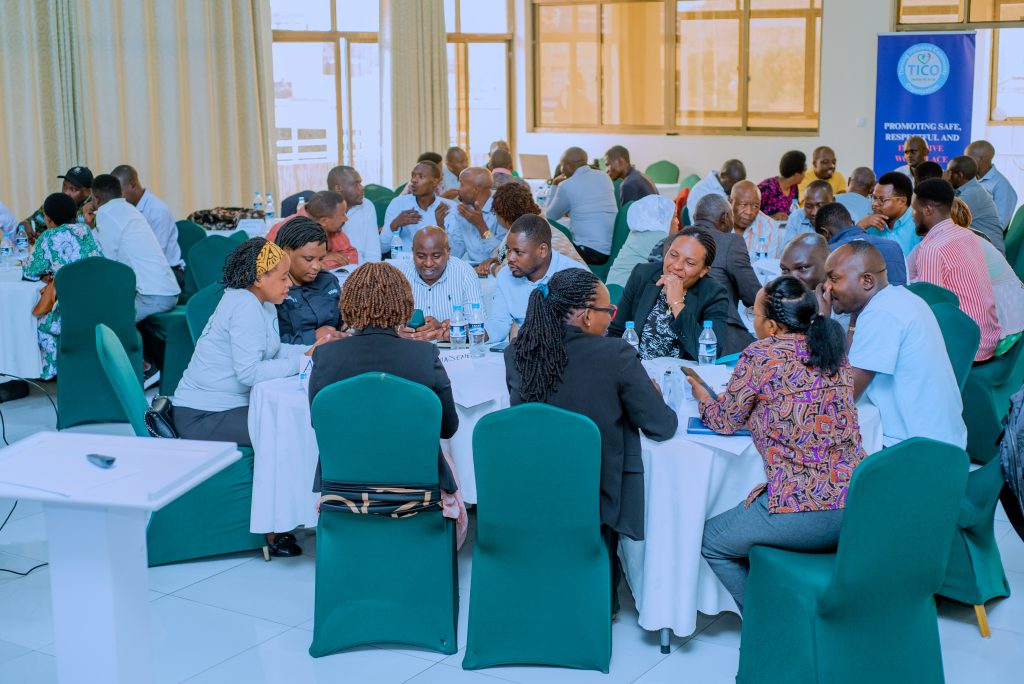
The two-day workshop brought together local leaders, employers, workers’ representatives, institutional stakeholders, and social partners to address a vital operational question: How do we turn knowledge about workplace violence and harassment into concrete action?
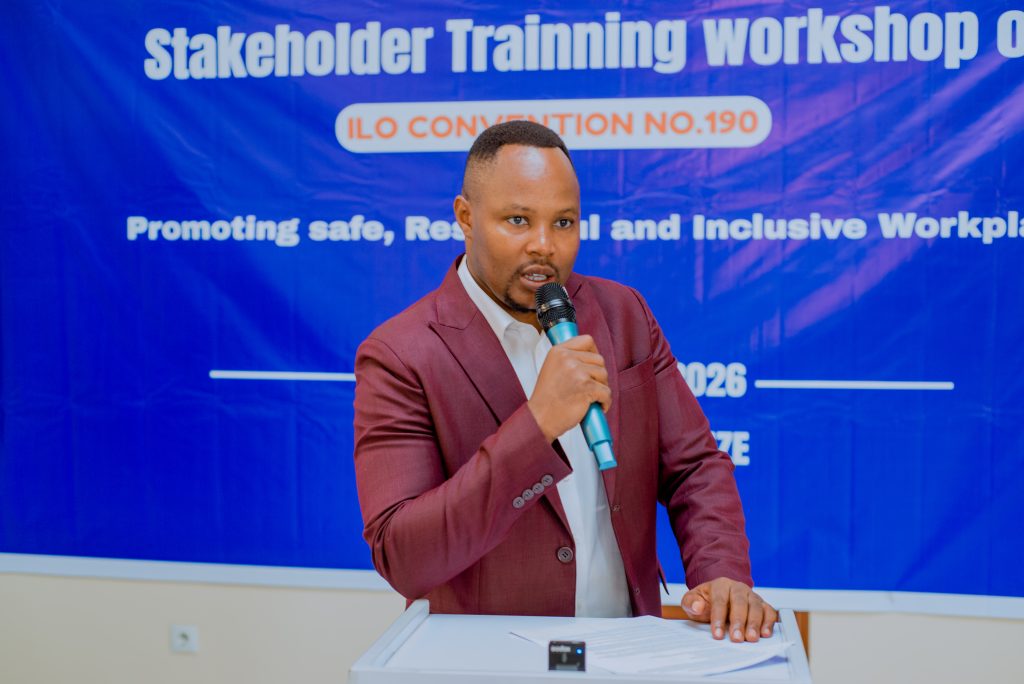
Opening the workshop, TICO’s Executive Director welcomed participants and emphasized that establishing safe work environments is a shared responsibility that yields direct benefits for employees, employers, and broader communities alike. Attendees were encouraged to exchange real-world experiences, participate in candid discussions, and co-create actionable strategies for their respective organizations.
Reinforcing this message, Mr. Clement Shyaka Rwamiheto, National Advisor at GIZ Rwanda’s Rights-Based Program (RBP), highlighted that preventing workplace harassment is a foundational duty. He noted that organizations prioritizing safety, respect, and dignity inherently build stronger, more effective teams.
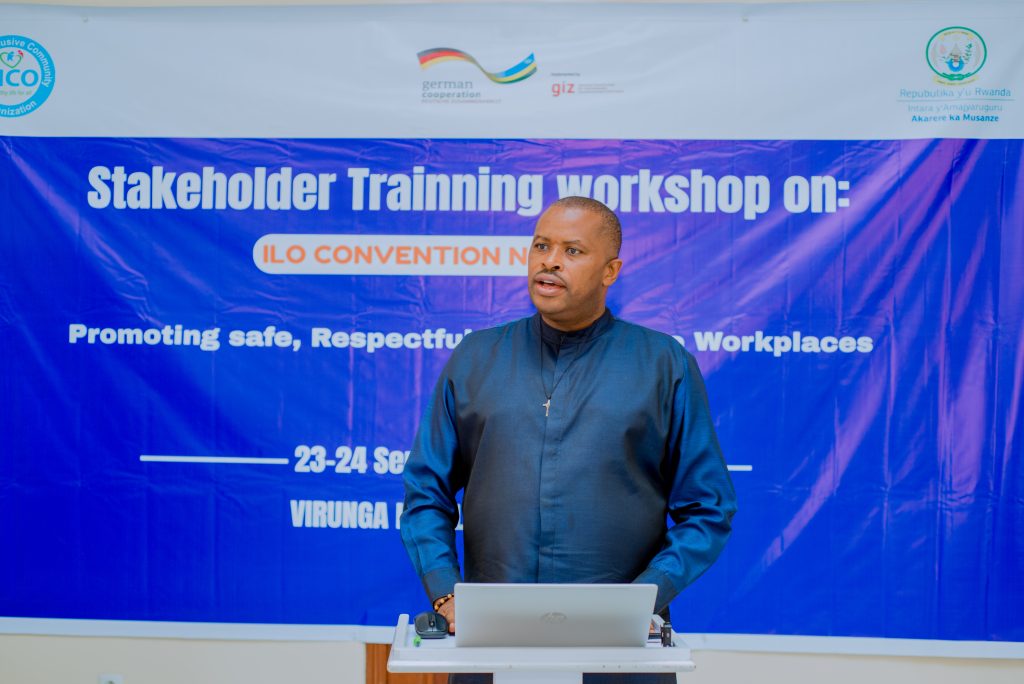
Ms. Uwanyirigira Clarisse, Vice Mayor in charge of Economic Development in Musanze District, officially opened the workshop. In her address, she affirmed that violence and harassment have no place in the world of work, urging attendees to extend discussions beyond the event and implement measurable standards in their organizations. She also commended TICO and GIZ Rwanda for their proactive leadership on workplace dignity.
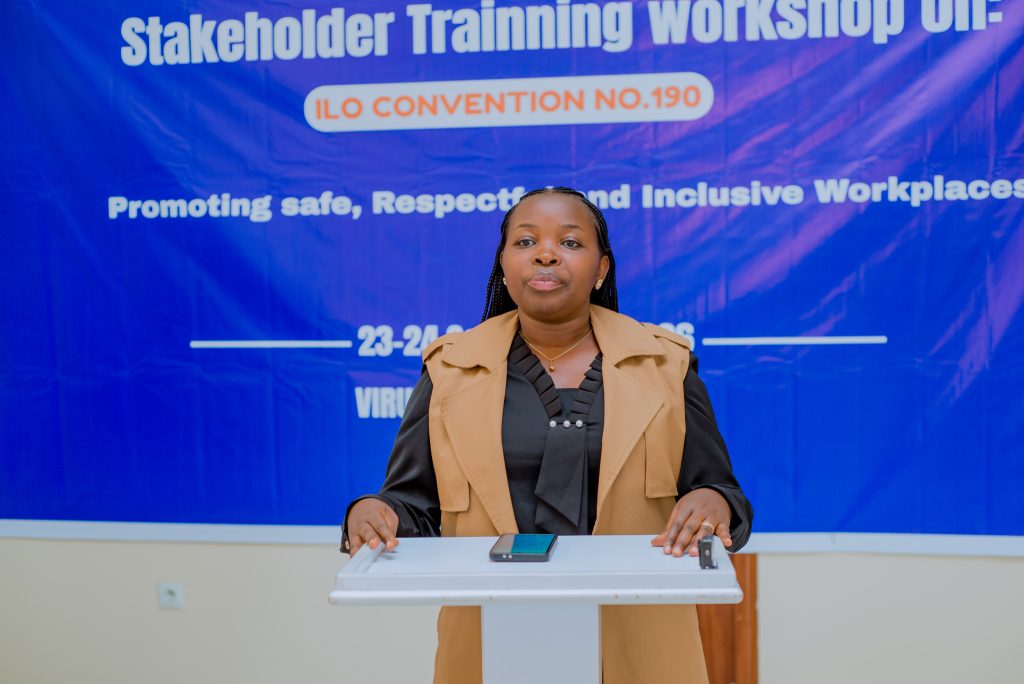
Throughout the training, participants examined how ILO Convention No. 190 aligns with Rwanda’s existing legal and policy frameworks, including national labour legislation, occupational safety and health standards, and non-discrimination mandates.
Day 1: Principles, Scope, and Legal Alignment
The opening day focused on the core principles and definitions of ILO Convention No. 190, detailing the obligations of various workplace actors. Through interactive group discussions, role-plays, and practical scenarios, participants examined how harassment manifests and how institutions can proactively identify and mitigate behavioral risks.
Day 2: Practical Prevention, Response, and Support
The focus shifted from theoretical understanding to operational mechanics. Attendees evaluated risk assessment strategies, workplace policy formulation, complaint-handling protocols, and objective investigation procedures. Discussions also detailed survivor support systems, including legal remedies, counseling access, and institutional reporting channels.
Through structured stakeholder mapping exercises, participants outlined collaborative frameworks to strengthen prevention and response mechanisms across local institutions.
The primary deliverable of the workshop was the creation of institution-specific workplace action plans. These tailored roadmaps allow participants to translate the core principles of ILO Convention No. 190 into everyday policies, reporting avenues, and operational standards within their institutions.
While training rooms build awareness, sustainable change depends on execution. By developing these individualized strategies, participants ensured that the workshop's impact would extend directly into their daily work environments.
In the closing session, TICO’s Executive Director challenged attendees to focus on post-training execution:
"We didn't ask, 'Did you enjoy the workshop?' We asked something harder: 'When you return to your workplace, what will you do differently?'"
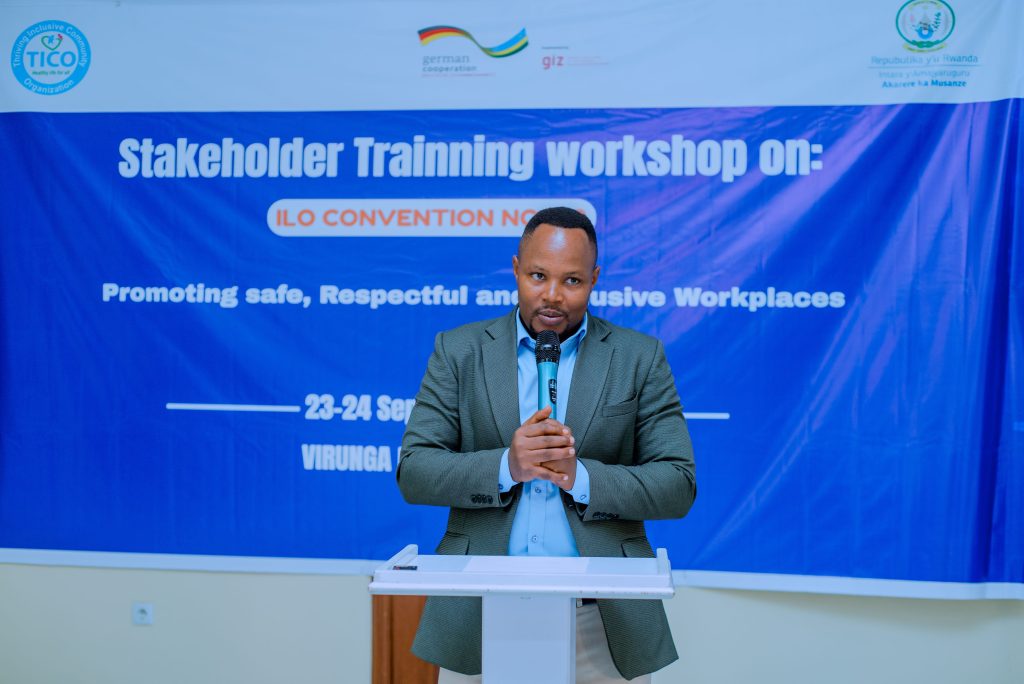
Emphasizing that attendance means little if everyday behavior remains unchanged, the Executive Director framed the conclusion of the workshop as the moment responsibility returns to each individual to question harmful practices and enforce standards of respect.
Mr. Clement Shyaka Rwamiheto reiterated that international frameworks like ILO C190 achieve true value only when workers experience measurable safety and dignity on the job.
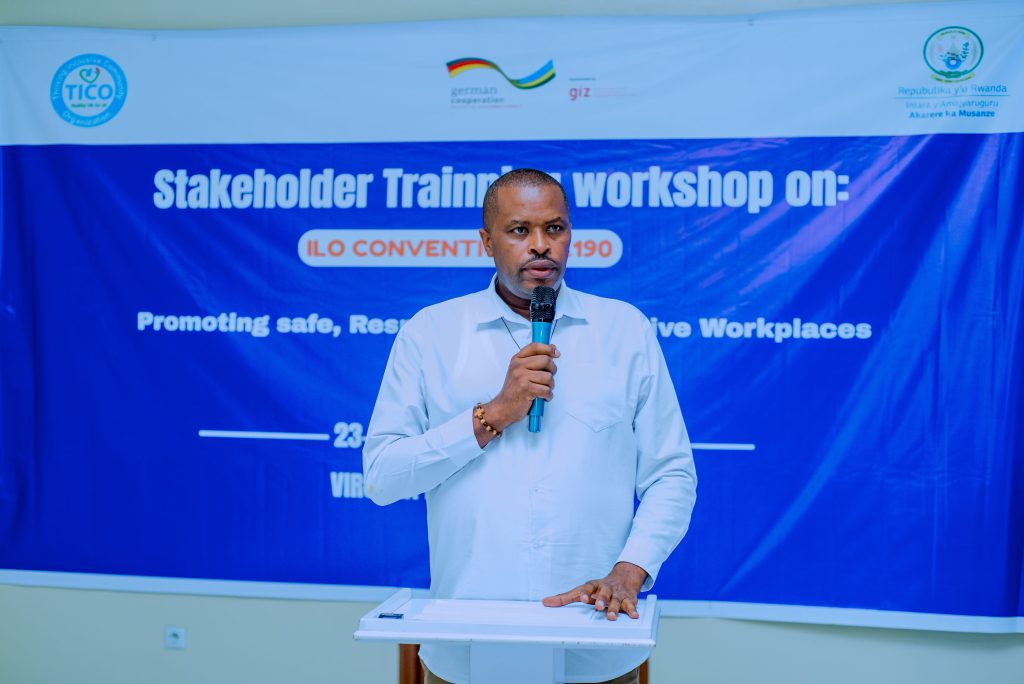
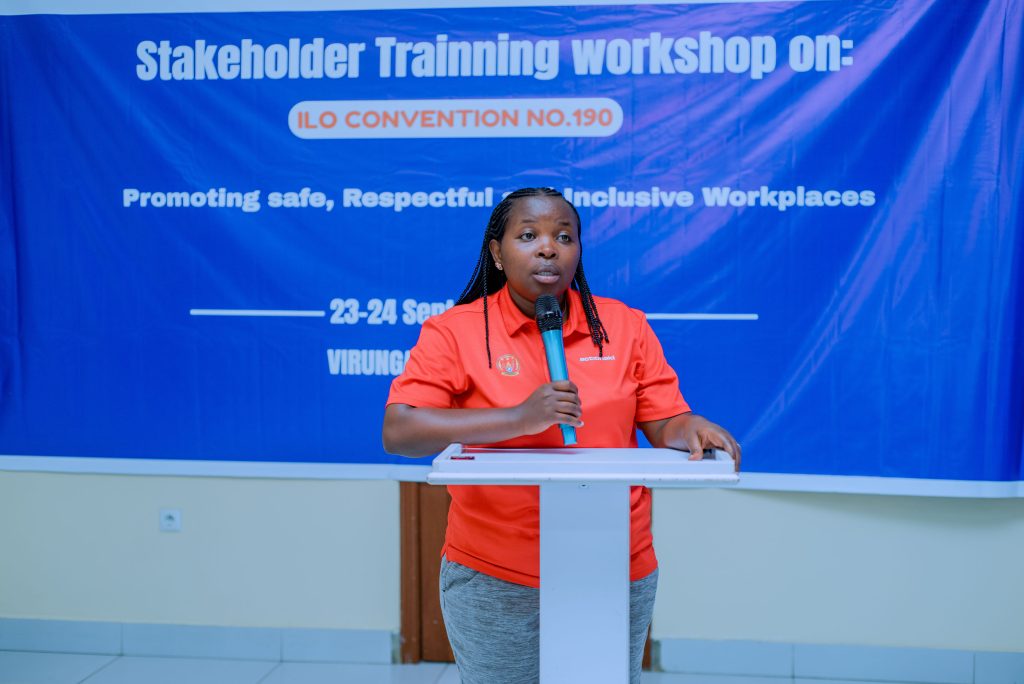
Delivering the official closing address, Vice Mayor Uwanyirigira Clarisse reminded participants that returning to routine operations cannot mean accepting unsafe workplace dynamics, reaffirming that Musanze District remains an active partner in advancing safe, decent work across all sectors.
The workshop venue may now be quiet, but the commitment continues as leaders carry these standards back to their organizations. The real work begins beyond the room.